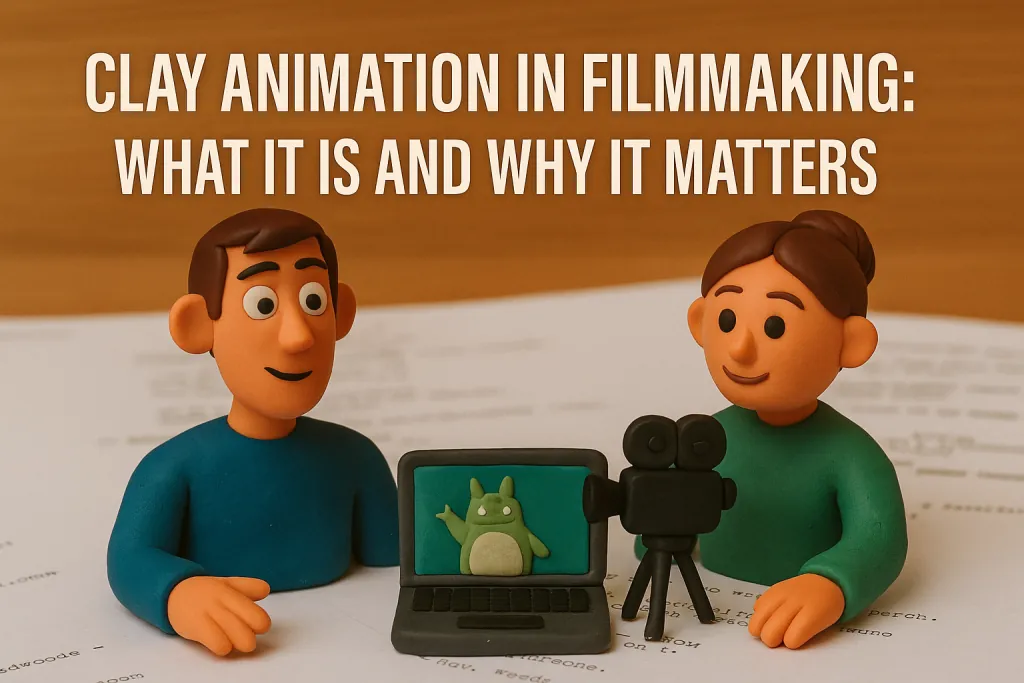
Clay Animation in Filmmaking: What It Is and Why It Matters
Opening Shot
A hand shapes a lump of clay into a character. A camera clicks. The hand moves the figure slightly, clicks again, then again. Hours become days, days become weeks. Finally, when the frames are played together, the clay figure leaps, laughs, or dances across the screen.
This is the magic of clay animation (claymation) a filmmaking technique where ordinary clay becomes extraordinary storytelling. From childhood classics like Wallace & Gromit to the modern stylized brilliance of Kubo and the Two Strings, clay animation continues to inspire awe because it is filmmaking at its most tactile, human, and painstakingly crafted.
But what exactly is clay animation? How does it work? And why does it matter in an era of CGI and AI-driven animation?
Step 1: What Is Clay Animation?
Clay animation (or claymation) is a type of stop-motion animation where characters and sets are sculpted from malleable substances like clay or plasticine.
The process:
Sculpt figures by hand.
Place them on a set.
Move them incrementally.
Capture one frame at a time.
Play back the sequence at 12–24 frames per second.
The result: the illusion of movement, bringing clay to life.
Try reelOn- Entertainment Networking Platform
Step 2: A Brief History of Clay Animation
1897: Earliest clay animation experiments credited to William Harbutt, inventor of Plasticine.
1908: The Sculptor’s Nightmare used clay figures in comedic storytelling.
1950s–60s: Studios like Art Clokey’s brought claymation to TV with Gumby.
1980s–90s: Aardman Animations (Wallace & Gromit, Chicken Run) perfected the art form.
2000s–2020s: Films like Coraline, Kubo and the Two Strings, and Early Man showed clay animation’s adaptability in modern cinema.
Even in 2025, clay animation continues to inspire creators, valued for its handmade authenticity in a digital age.
Step 3: The Techniques of Clay Animation
Claymation involves meticulous craftsmanship. Key methods include:
Freeform Clay Animation: Figures are reshaped between frames.
Clay Painting: Clay spread on glass, manipulated like paint.
Character & Armature Builds: Clay wrapped around wire skeletons for stability.
Combination Techniques: Mixing clay with puppetry, CGI, or live-action.
Each technique influences tone whimsical, surreal, or realistic.
Step 4: Why Clay Animation Matters in the Modern Era
Despite CGI dominance, clay animation holds unique value:
Tactile Realism: Every imperfection feels human, organic, and alive.
Artistic Expression: Clay’s malleability allows exaggerated, expressive motion.
Cultural Legacy: Beloved franchises (Wallace & Gromit, Chicken Run) remain globally iconic.
Inspiration for AI/CGI: Many digital tools now mimic clay textures for nostalgic appeal.
It matters because it reminds us that cinema is not only about speed or scale it’s about craft, patience, and personality.
Step 5: Clay Animation and Storytelling Power
Clay characters resonate because they look “handmade,” evoking warmth and relatability. They embody:
Humor (Wallace & Gromit’s quirky charm).
Darkness (Coraline’s eerie atmosphere).
Myth (Kubo’s epic Japanese folklore).
Clay animation works across genres, proving it’s more than a niche technique.
Step 6: Claymation in the Age of Streaming & AI in 2025
Streaming platforms invest in clay shorts for their unique visual branding.
Indie creators revive claymation using DSLR + smartphone rigs.
AI helps with frame clean-up and lighting but cannot replicate clay’s tactile soul.
Like reelOn emphasis on safe platforms and community trust, clay animation thrives when authenticity and craftsmanship are valued alongside technology.
Step 7: Challenges of Clay Animation
Time-intensive: A 90-minute film can take years.
Fragility: Clay figures deform under lights.
Budget: Labor costs are high.
Yet these challenges make claymation beloved it’s cinema where every frame is a labor of love.
Step 8: Clay Animation’s Future
Expect:
Hybrid films mixing clay with CGI.
VR claymation experiences where viewers step into sculpted worlds.
Educational teaches patience, creativity, and storytelling in schools.
Clay animation may be old, but it’s timeless and poised to evolve alongside AI and immersive tech
Closing Shot
Clay animation proves that cinema is as much about hands as it is about machines. In a world of hyper-polished CGI and AI-generated visuals, clay’s imperfections make it powerful, raw, relatable, and deeply human.
Just as reelOn prioritizes safe casting, secure platforms, and community standards to protect creativity, clay animation reminds us that true innovation happens when technology and craft respect one another.
Clay isn’t just mud molded into shapes, it's a storytelling tool that shaped cinema yesterday, inspires it today, and will continue to matter tomorrow.
FAQs
1. What is clay animation?
A. A form of stop-motion where clay figures are animated frame by frame.
2. Who invented clay animation?
A. William Harbutt (Plasticine inventor) pioneered early clay animation in the late 1800s.
3. What’s the most famous clay animation?
A. Wallace & Gromit and Chicken Run are global icons.
4. How long does claymation take?
A. A few seconds of footage can take hours or days to shoot.
5. Why is clay animation special?
Its handmade look feels human, warm, and authentic.
6. Is clay animation still used today?
A. Yes, studios like Aardman and indie filmmakers continue to use it.
7. Can clay animation combine with CGI?
A. Absolutely, hybrid films use clay textures enhanced by digital effects.
8. What tools are used?
A. Clay, wire armatures, cameras (DSLRs or smartphones), and editing software.
9. Is clay animation expensive?
A. It can be, due to labor, but indie filmmakers create low-budget clay projects too.
10. Will clay animation survive AI?
A. Yes AI may assist, but clay’s tactile authenticity cannot be replicated digitally.

