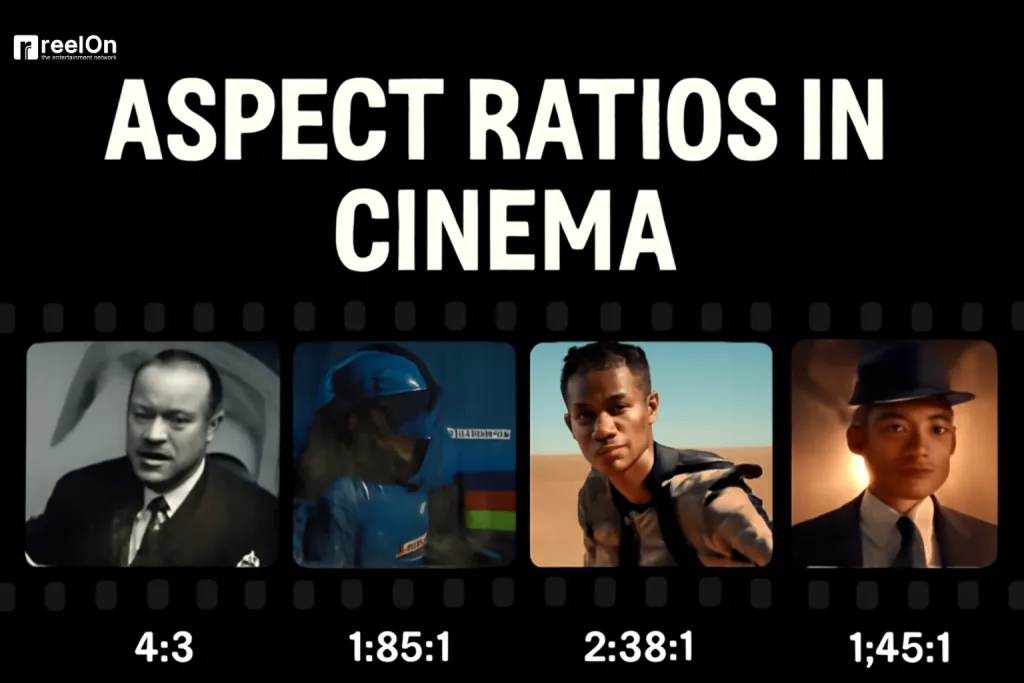
Famous Films and Their Aspect Ratios: A Visual Breakdown 2025
Introduction
Aspect ratios have been one of cinema’s most fascinating tools since the early 20th century. On reelOn, creators explore how early cinematic tools shaped modern filmmaking. More than a technical specification, the shape of the frame is a storytelling device. When a director chooses 2.39:1 widescreen instead of 4:3 Academy, they’re not just filling the screen differently, they're deciding how we feel about intimacy, scale, and space.
In 2025, when films release simultaneously on theatre screens, streaming platforms, and social media feeds, aspect ratios have become even more crucial. Modern films are often shot with multiple outputs in mind: theatrical scope, home-viewing formats, and even vertical cuts for TikTok or Instagram.
This article explores famous films across history and genres, breaking down the aspect ratios that defined their visual storytelling. By the end, you’ll understand not only what ratios were used, but why they mattered and how they shaped audience emotions.
The Academy Standard (1.33–1.37:1)
Famous Films
The Wizard of Oz (1939) – 1.37:1
It’s a Wonderful Life (1946) – 1.37:1
Citizen Kane (1941) – 1.37:1
Why It Worked
The nearly-square Academy ratio emphasized faces, dialogue, and vertical compositions. Directors often used ceilings, headroom, and depth-of-field to convey psychological pressure.
This ratio is often associated with nostalgia today. When used in modern films like The Lighthouse (2019) it signals claustrophobia, memory, or vintage atmosphere.
Widescreen America: 1.85:1
Famous Films
Jurassic Park (1993) – 1.85:1
The Dark Knight Rises (2012, non-IMAX sequences) – 1.85:1
Forrest Gump (1994) – 1.85:1
Why It Worked
1.85:1 became the Hollywood standard for decades, offering a balance between intimacy and spectacle. It is slightly wider than 16:9 television, making it feel cinematic but still practical for diverse genres from comedies to thrillers.
Directors love this ratio because it frames two-shots beautifully, giving actors and environments equal weight.
Try reelOn - Entertainment Networking Platform
Cinemascope & Epic Storytelling: 2.35–2.39:1
Famous Films
Lawrence of Arabia (1962) – 2.20:1 (70mm) but widely known for its wide compositions
Star Wars: A New Hope (1977) – 2.35:1
The Lord of the Rings Trilogy (2001–2003) – 2.39:1
Mad Max: Fury Road (2015) – 2.39:1
Why It Worked
CinemaScope introduced visual grandeur. Wide ratios highlight landscapes, armies, chase scenes, and relational dynamics in space. Mad Max: Fury Road used 2.39:1 not just for action but also to center faces within chaos.
Audiences equate this ratio with “epic cinema.” When they see black bars on a home screen, it feels like an event.
The IMAX Experience: 1.43:1 and 1.90:1
Famous Films
The Dark Knight (2008) – select IMAX sequences in 1.43:1
Interstellar (2014) – variable aspect ratios including IMAX
Oppenheimer (2023) – filmed in 1.43:1 for IMAX 70mm presentation
Why It Worked
IMAX ratios are about immersion and awe. They emphasize verticality skyscrapers, rockets, cliffs, or the human figure against vast backdrops. Nolan popularized IMAX integration, using it for large-scale moments (bank heist in The Dark Knight, black hole in Interstellar).
The sudden switch from 2.39 to 1.43/1.90 often creates an emotional swell, similar to a musical crescendo.
The Rise of 16:9 (1.78:1)
Famous Films/Series
Avengers: Endgame (2019, streaming versions adjusted to 16:9)
Breaking Bad (2008–2013) – 16:9 TV standard
The Irishman (2019, Netflix) – 16:9 master
Why It Worked
16:9 is the streaming and broadcast default. It is practical for home viewing and flexible across genres. While it lacks the “epicness” of 2.39, it ensures compatibility with TVs, laptops, and smartphones.
Many filmmakers today shoot in 2:1 or 2.39, then deliver cropped or reformatted 16:9 masters for OTT platforms.
The 2:1 Univisium Compromise
Famous Films/Series
House of Cards (2013–2018) – popularized 2:1 for Netflix
Roma (2018) – 2:1
The Batman (2022) – 2.39 for theatres, but marketing promos leaned 2:1
Why It Worked
Created by Vittorio Storaro, Univisium (2:1) is considered the perfect balance between cinema and streaming. It’s wide enough to feel cinematic but tall enough for vertical reframing.
Today, many premium streaming shows and OTT-first films adopt 2:1 for consistency across platforms.
Square and Social: 1:1
Famous Examples
Instagram-native short films and ads
Music videos experimenting with square frames
Moments in Love (art films)
Why It Worked
Square feels intimate and stable. It centers attention and recalls old photographs or Polaroids. In narrative cinema, it suggests confinement or memory. In marketing, it’s ideal for social feeds.
Vertical Video: 9:16
Famous Uses
TikTok-native short films and promos
Experimental cinema showcased at festivals (2020s onwards)
Bo Burnham: Inside (2021, Netflix) used vertical aesthetics in portions
Why It Worked
Vertical video feels personal, immediate, and immersive. It aligns with how we naturally hold phones. In 2025, vertical-first films and campaigns are gaining ground, proving that this format isn’t a gimmick but a legitimate storytelling tool.
Variable Ratios: Storytelling Through Change
Famous Films
The Grand Budapest Hotel (2014) – shifted between 1.37, 1.85, and 2.35 to indicate different timelines
La La Land (2016) – briefly shifted to CinemaScope for the dream sequence
Everything Everywhere All at Once (2022) – playful ratio shifts for multiverse storytelling
Why It Worked
Changing aspect ratios draws attention to time, perspective, or scale. When done well, it enhances the narrative transporting the viewer into different worlds, eras, or emotional states.
Modern Experiments in Aspect Ratios (2020–2025)
The Lighthouse (2019) – 1.19:1 for psychological claustrophobia
Oppenheimer (2023) – IMAX dominance with variable framing
Euphoria (HBO series) – plays with 4:3 sequences for mood shifts
TikTok festivals (2022–2025) – full vertical cinema submissions
The trend today is freedom. Filmmakers are no longer locked into one ratio they pick what supports the story and platform.
How Aspect Ratios Shape Emotion
Wide ratios (2.35–2.39): grandeur, loneliness, epic scale.
Tall ratios (4:3, IMAX): confinement, awe, vertical power.
Square (1:1): intimacy, balance, nostalgia.
Variable: narrative shifts, psychological breaks, transitions.
Aspect ratio has become as expressive as lighting, color, or sound.
Conclusion
From the Academy standard of 1.37 to the social-first 9:16 verticals of today, aspect ratios have been more than math they are storytelling containers. On the reelOnApp, filmmakers can explore how classic ratios shaped storytelling. Famous films across decades prove that directors carefully wield frame shapes to guide emotion, immersion, and meaning.
As 2025 unfolds, we’ll see more multi-format projects, where one story lives across cinema halls, Netflix apps, and Instagram reels each shaped differently but emotionally consistent.
The next great revolution won’t be about inventing new ratios but about using them flexibly to connect with audiences wherever they are.
FAQs
1. What is an aspect ratio?
A. It’s the proportional relationship between a frame’s width and height.
2. Which aspect ratio is most “cinematic”?
A. 2.39:1 CinemaScope is traditionally seen as the most cinematic.
3. Why did old films use 4:3?
A. It was the technical standard of early cameras and projectors.
4. What ratio does IMAX use?
A. 1.43:1 for film IMAX and 1.90:1 for digital IMAX.
5. What is the most common streaming ratio?
A. 16:9 and increasingly 2:1 for premium shows.
6. Can vertical films be cinematic?
A. Yes, when used intentionally they feel intimate and immersive.
7. Why do some films change aspect ratios?
A. To signal time shifts, perspectives, or emotional changes.
8. What ratio does Christopher Nolan prefer?
A. Nolan often uses IMAX 1.43/1.90 combined with 2.39.
9. Which ratio is best for social media?
A. 1:1 (square) and 9:16 (vertical) dominate feeds.
10. Is 2:1 really the “universal” ratio?
A. Yes, it balances cinema scope with streaming flexibility.

