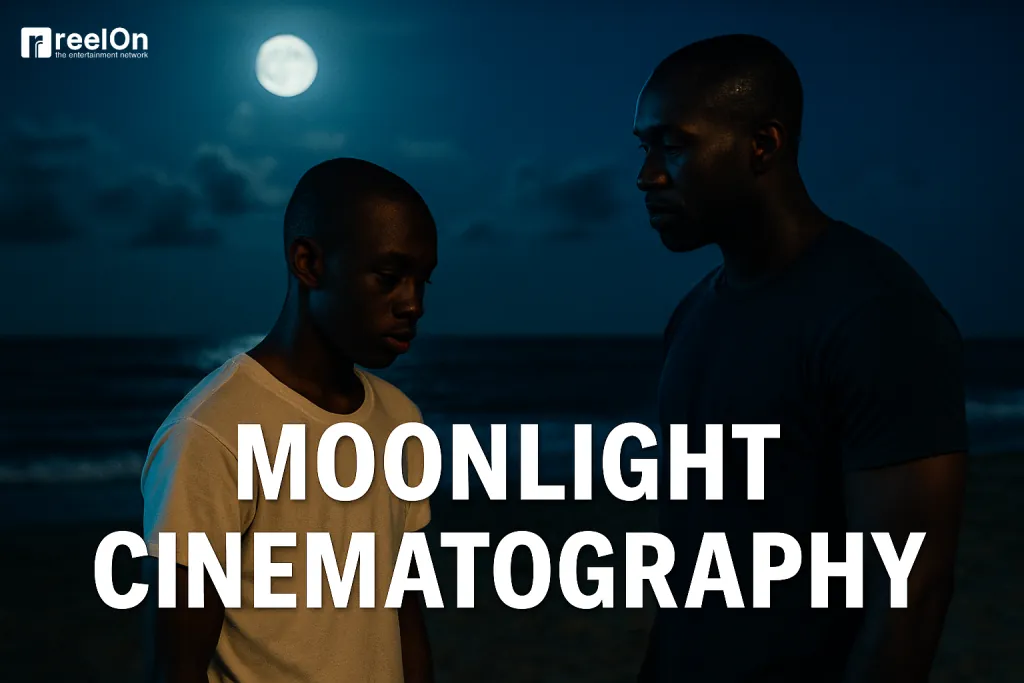
Moonlight Cinematography: Painting Emotion with Light and Color
Opening Shot: Cinema as Poetry
A young boy, nicknamed Little, runs through the streets of Miami. The camera follows closely, handheld, weaving between buildings as he gasps for breath. Later, as he sits in the glow of ocean-blue streetlights, we see his world reflected in his eyes. These aren’t just shots; they are visual poems fragments of light, color, and texture that immerse us in his journey.
That’s the magic of Moonlight (2016).Directed by Barry Jenkins and shot by cinematographer James Laxton, Moonlight redefined what independent filmmaking could look like. With a modest budget and naturalistic setups, it delivered a story that felt both intimate and mythic, grounded in realism yet elevated by its painterly cinematography.
This blog unpacks the techniques that made Moonlight’s cinematography iconic a masterclass in how light, color, and composition can carry emotional weight
If you’re inspired by films like Moonlight and want to explore how cinematography shapes storytelling, reelOn connects aspiring filmmakers with mentors, peers, and opportunities to grow.
The Visual Philosophy of Moonlight
James Laxton’s cinematography was guided by Jenkins’ vision: to tell a deeply personal story about identity, masculinity, and vulnerability but through a lens that made the characters feel larger than life.
Key goals of the cinematography:
Blend realism with lyricism. Real Miami locations with stylized lighting.
Honor Black skin tones. Lighting and color designed to make darker skin glow on screen.
Mirror emotion through color. Blue for longing and identity, gold for warmth and love, pink/purple for transitions.
Stay close to characters. Intimacy through close-ups, handheld camera, and shallow depth of field.
Try reelOn - Entertainment Networking Platform
Lighting: Sculpting Faces, Painting Emotions
One of the greatest achievements of Moonlight is how it lit Black skin. Traditionally, mainstream cinema underexposes or flattens darker tones. Laxton flipped this convention, using bold, expressive lighting that celebrated skin as a canvas.
Techniques:
Sodium-vapor streetlights (common in Miami) created deep orange hues in exteriors.
Cool blue gels and LEDs contrasted with warm tones, producing a neon dreamscape.
Motivated lighting: Often tied to natural sources lamps, windows, streetlights to ground the world in realism.
Directional highlights: Faces were lit to emphasize sweat, shine, and texture, making emotion tactile.
Want to practice and share your own lighting experiments? The reelOn lets you upload projects, get peer feedback, and connect with cinematographers worldwide.
Example – Juan teaching Little to swim:
The scene is bathed in natural sunlight. Reflections off the water wrap Little’s face in highlights. The light feels spiritual, turning the ocean into a baptismal font a rebirth of trust and identity.
Color Palette: The Visual Language of Identity
Color in Moonlight isn’t decorative; it’s thematic storytelling.
Blue: Central to the film’s identity. Represents longing, water, fluidity, and the idea of “in moonlight, Black boys look blue.”
Gold/Amber: Represents warmth, intimacy, and human connection (Juan’s mentorship, Paula’s complex love).
Pink/Purple: Transitional, used in key turning points (Chiron’s teenage years, romantic beach scene).
Case Study – The Beach Scene (Chiron and Kevin):
The scene glows with cool moonlit blue, layered with soft pink hues. This color blend creates a tender, dreamlike atmosphere highlighting vulnerability and first love.
Camera Movement: Intimacy and Immersion
Laxton and Jenkins often used handheld camera to stay physically close to characters, as if we were breathing with them.
Techniques:
360° circling shots: Symbolize disorientation, vulnerability, or transition (Juan confronting bullies, Chiron at the diner).
Close, shallow-focus shots: Pull us into characters’ inner worlds by isolating them from their environment.
Tracking shots: Follow characters through tight spaces, enhancing realism.
Example – Opening scene:
The camera circles Juan as he arrives in Liberty City. The movement is fluid but uneasy, signaling both his dominance in the space and the instability of the world around Little.
Composition & Framing: Faces as Landscapes
Centered Close-Ups: Many shots frame characters head-on, with minimal background distraction. Their faces become the canvas.
Negative Space: Frequently used to emphasize isolation or alienation.
Symmetry & Stillness: Contrasts against moments of handheld chaos, underlining pivotal beats.
Example – Adult Chiron at the Diner:
Framed in close-up with shallow depth of field. Neon lights blur behind him. The framing isolates him, but the color wash softens his hardened exterior, hinting at vulnerability beneath.
Sound & Visual Rhythm
Though primarily about cinematography, sound shapes how visuals are perceived:
Ambient Miami sounds (waves, traffic, crickets) ground the naturalism.
Nicholas Britell’s score uses chopped-and-screwed classical pieces. Combined with visuals, it creates a haunting, dreamlike rhythm.
The pacing of cuts mirrors breathing long takes during intimacy, rapid cuts during violence.
Scene-by-Scene Cinematography Analysis
1. Juan Teaching Little to Swim
Natural sunlight, handheld intimacy.
Ocean doubles as both danger and salvation.
Baptismal imagery emphasized by lens flare and reflective highlights.
2. School Fight (Teenage Chiron)
Harsh fluorescent lights create cold, clinical atmosphere.
Handheld chaos during the fight contrasts with static aftermath (Chiron’s stillness).
3. The Beach Scene
Cool moonlight + warm pink highlights.
Soft focus and stillness amplify vulnerability.
A rare moment of peace, captured with painterly light.
4. Rooftop Drug Scene (Paula and Little)
Paula lit in fiery red anger and addiction.
Little half-lit in shadow, symbolizing innocence under threat.
5. The Diner Reunion (Adult Chiron & Kevin)
Neon blue and green wash the diner, reflecting nostalgia and vulnerability.
Shallow focus isolates the two men from the world, creating intimacy.
Indie Roots: Big Cinematic Impact on a Small Budget
Shot on a budget of $1.5 million, Moonlight achieved grandeur without spectacle.
Natural Locations: Liberty City, Miami.
Minimal Gear: Mostly handheld, with LED and practical lighting.
Crew Adaptability: Indie flexibility allowed experimentation with color gels, framing, and improvised movement.
Legacy: Why Moonlight’s Cinematography Matters
Representation: Changed how Black skin is lit and celebrated in cinema.
Indie Inspiration: Proved small-budget films can look painterly and mythic.
Cultural Impact: Its blue-gold-pink palette became iconic, studied in film schools and emulated by creators.
Awards: James Laxton earned an Academy Award nomination for Best Cinematography
Closing Shot: Moonlight as Visual Poetry
When we remember Moonlight, we don’t just recall its story we recall images bathed in blue, faces glowing in gold, and tender moments captured in close-up intimacy.
Its cinematography reminds us that film is not just about documenting reality. It’s about transforming it into visual poetry. And with Moonlight, Barry Jenkins and James Laxton gave us a cinematic poem that will resonate for generations.
FAQs
Who was the cinematographer of Moonlight?
A. James Laxton.Why is blue so important in Moonlight?
A. It symbolizes identity, longing, and references the line “In moonlight, Black boys look blue.”How did Laxton light Black skin differently?
A. By using bold contrasts, reflective highlights, and colors that enhance rather than flatten darker tones.Was Moonlight shot on film or digital?
A. Shot digitally (Arri Alexa XT), with grading to emulate film richness.How did handheld camera enhance the story?
A. It created intimacy and vulnerability, keeping us physically close to characters.Why does the diner scene look so dreamlike?
A. Because of neon washes (blue/green) and shallow depth of field.What’s the role of color pink in the film?
A. Used during transitions and vulnerable moments, representing tenderness.How does sound support cinematography in Moonlight?
A. Ambient sounds and Britell’s score deepen the emotional rhythm of visuals.How did budget affect cinematography?
A. Constraints pushed creativity more handheld, practical lights, and naturalistic setups.What’s Moonlight’s biggest lesson for indie filmmakers?
A. That emotional resonance, not expensive gear, makes visuals cinematic.

