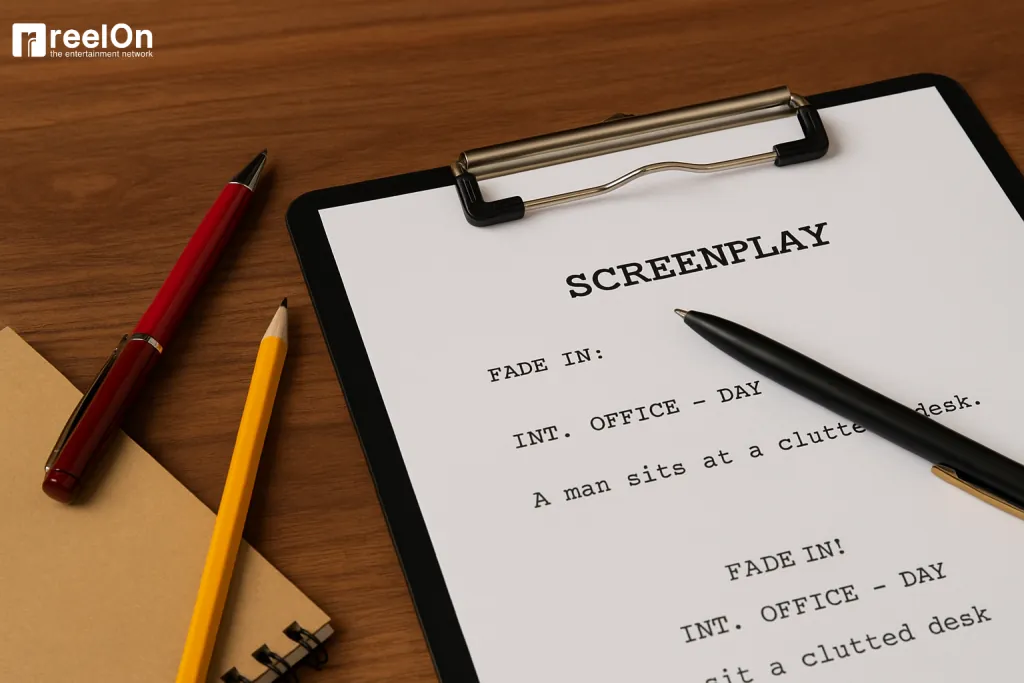
Screenplay: The Foundations of Screenwriting
Opening Shot
Imagine sitting in a darkened theatre as the lights dim. The screen flickers to life with the words FADE IN. From the first moment, you’re transported into a world crafted not by chance, but by design. Every line of dialogue, every twist of fate, every heartbeat of tension on screen traces back to one essential document: the screenplay.
Behind every award-winning film, from Casablanca to Parasite, lies a blueprint that guided directors, actors, and entire crews toward a single creative vision. A screenplay is not just words on a page it’s the DNA of cinema. It defines the characters, conflicts, arcs, and themes that will one day leap off the page and onto the screen.
But how do screenwriters build this foundation? What are the rules and structures that separate an idea from a powerful story? This blog dives deep into the foundations of screenwriting exploring why screenplay structure matters, how to balance creativity with craft, and the timeless principles every writer must master.
By the end, you’ll see why the screenplay is the beating heart of filmmaking and why learning its foundations isn’t just useful, it’s essential. To explore more screenwriting insights and connect with fellow creators, visit reelOn
What is a Screenplay?
A screenplay is a written document that serves as the blueprint for a film, TV show, or web series. It contains:
Dialogue: What characters say.
Action Lines: What happens visually in the scene.
Scene Headings (Sluglines): Where and when the scene takes place.
Transitions: Movement between scenes (e.g., FADE IN, CUT TO).
Unlike novels, screenplays are written in present tense and focus on showing, not telling. Every word serves the visual medium describing what the camera sees and what the audience hears.
The Importance of Foundations
Screenwriting is both an art and a craft. While creativity fuels originality, the craft ensures the story resonates with audiences. These foundations are universal:
Structure: The backbone that organizes events into a meaningful arc.
Character: The soul of the screenplay, where goals, flaws, and transformation drive story.
Conflict: The engine of drama without it, stories stall.
Theme: The underlying “why” behind the story.
Format: The professional standard that makes scripts readable in the industry.
Without these foundations, even the most original idea risks falling apart.
Try reelOn - Entertainment Networking Platform
The Three-Act Structure
At the heart of screenwriting lies the three-act structure, a storytelling framework dating back to Aristotle:
Act I – Setup (25–30 pages): Introduce the world, characters, and conflict. Ends with the inciting incident.
Act II – Confrontation (50–60 pages): Rising action, escalating stakes, and obstacles. Includes a midpoint shift and leads to the all is lost moment.
Act III – Resolution (20–30 pages): The climax and emotional payoff. Characters face final tests, leading to change or failure.
This structure isn’t a prison it’s a guide. Even films that appear unconventional (like Memento or Pulp Fiction) still rely on these foundational beats beneath their experimentation.
Character as Foundation
A screenplay lives or dies on its characters. Strong characters must have:
Goals: What do they want? (external + internal)
Flaws: What holds them back?
Arc: How do they change?
For example:
Rocky wants to win the fight, but what he really needs is self-respect.
Frodo in The Lord of the Rings must destroy the Ring, but his arc is about resilience and sacrifice.
Characters drive action, and their transformation defines the emotional journey of the story.
Conflict and Stakes
Conflict isn’t just fighting, it's about opposing forces that create tension. Good screenwriting balances internal conflict (emotional struggles) with external conflict (obstacles in the world).
Example:
In La La Land, the external conflict is chasing dreams; the internal conflict is balancing love with ambition.
In The Dark Knight, Batman battles Joker (external), but also struggles with what kind of hero he’s willing to be (internal).
Without conflict, there’s no drama and without stakes, there’s no reason for the audience to care.
The Role of Theme
Theme answers the question: What is this story really about?
Titanic isn’t just about a sinking ship it’s about love transcending class and mortality.
Parasite isn’t just about a family’s scheme, it's about inequality and the illusion of social mobility.
Writers who ignore the theme risk creating hollow stories. The theme gives depth, connecting audiences on an emotional and philosophical level.
Formatting and Industry Standards
A screenplay isn’t just about the story it must also be professionally formatted. Why? Because industry readers expect clarity and consistency.
Standard length: 90–120 pages.
1 page = 1 minute of screen time (roughly).
Software: Final Draft, Celtx, WriterDuet, Fade In.
Poor formatting screams “amateur” and risks rejection before the first page is even read.
Mistakes Beginners Make
Overwriting: Too much description bogs down pace.
Exposition dumps: Telling instead of showing.
Flat characters: No goals, flaws, or arcs.
Ignoring structure: Leads to messy second acts.
Weak dialogue: Dialogue that explains instead of reveals.
Closing Shot
A screenplay isn’t just the beginning of a film, it is the film. It’s the bridge between imagination and cinema, the map that guides directors, actors, and crew toward a unified vision.
Learning the foundations of screenwriting doesn’t mean sacrificing creativity; it means giving your creativity the tools to thrive. From structure to character arcs, conflict to theme, these elements are the bedrock on which timeless stories are built.
Remember: when you write a screenplay, you’re not just writing words. You’re creating a blueprint for emotions, images, and experiences that will echo on screen for years to come. So start with the foundations, build with care, and someday, your words may light up the screen with FADE IN. And when you’re ready to share your journey or connect with collaborators, the reelOnApp is there to support your path from page to screen.
FAQs
What is a screenplay?
A. A written blueprint for a film, including dialogue, action, and structure.How long is a screenplay?
A. Usually 90–120 pages, about one page per minute of screen time.What’s the three-act structure?
A. A storytelling framework with setup, confrontation, and resolution.Do all films follow this structure?
A. Most do, even if they experiment with timelines or styles.How important is formatting?
A. Crucial poor formatting can get your script rejected immediately.What makes a strong character?
A. Clear goals, flaws, and an emotional arc.What is conflict in screenwriting?
A. Opposing forces (internal or external) that create drama and stakes.Should I focus on the theme?
A. Yes, the theme adds depth and connects with audiences emotionally.Do I need screenwriting software?
A. Yes, tools like Final Draft or Celtx make formatting professional and easy.Can I break the rules?
A. Once you master them, yes but foundations come first.

