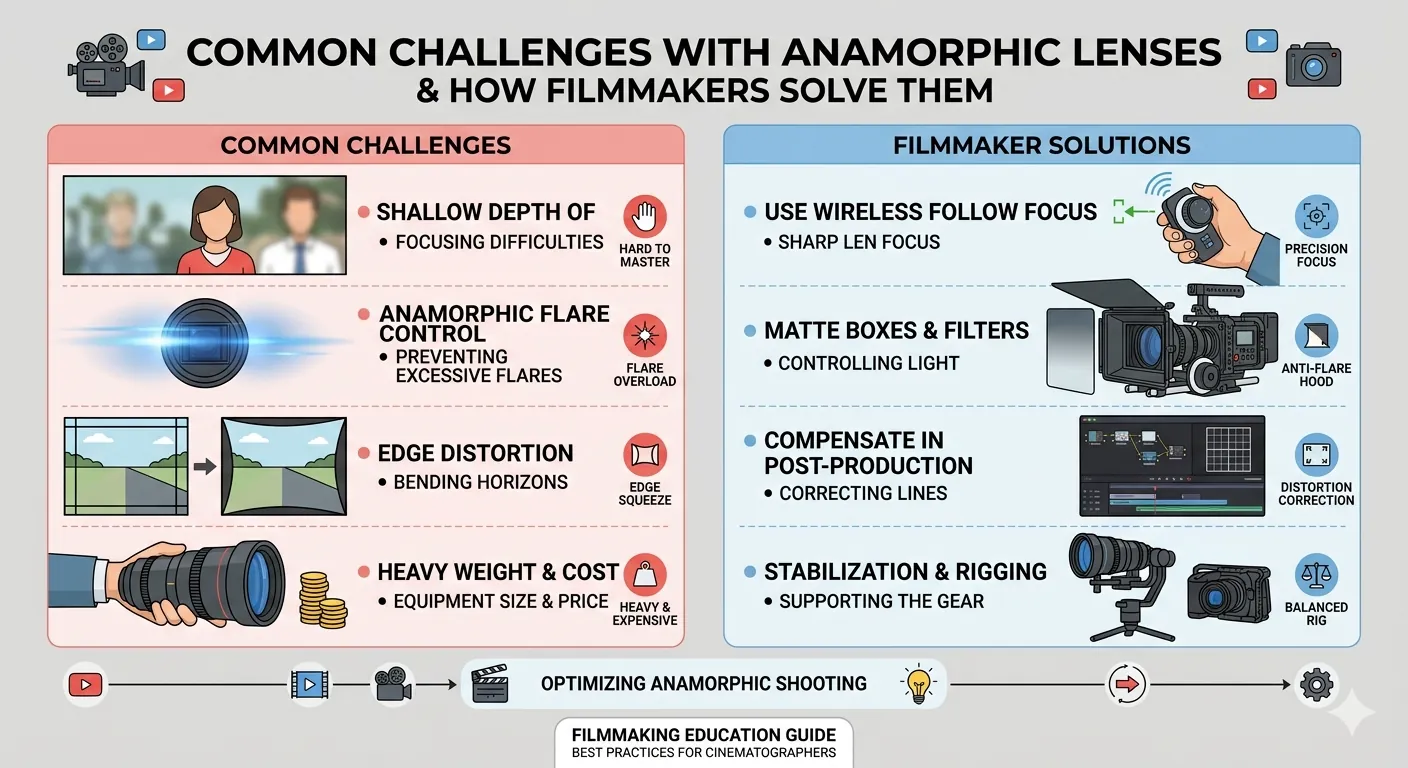
Common Challenges with Anamorphic Lenses (and How Filmmakers Solve Them)
Opening Shot
Anamorphic lenses are often described as the ultimate tool for creating cinematic magic. The widescreen aspect ratio, stunning lens flares, and oval-shaped bokeh make them a favorite among filmmakers. But like any creative tool, they come with their own set of challenges. For indie creators and professionals alike, knowing how to tackle these obstacles is what separates frustration from brilliance. On reelOn, filmmakers share not only their results but also their solutions because cinematic storytelling is about craft as much as vision.
Challenge 1: High Costs
Professional anamorphic lenses can cost thousands of dollars, making them inaccessible for many independent filmmakers.
Solution: Many creators turn to budget-friendly options like adapters, entry-level anamorphic lenses (Sirui, Vazen, Laowa), or smartphone add-ons to achieve the look without studio-level budgets.
Challenge 2: Focus and Depth of Field
Anamorphic lenses often have a shallower depth of field, making focus pulling tricky.
Solution: Skilled focus pullers, wireless follow-focus systems, and rehearsed blocking help maintain sharpness in critical scenes.
Try reelOn - Entertainment Networking Platform
Challenge 3: Image Distortion
Edge softness and stretching are common with anamorphics, especially on lower-end models.
Solution: Filmmakers embrace these quirks as part of the cinematic aesthetic or adjust composition to keep key subjects centered.
Challenge 4: Lens Breathing
Focus changes on anamorphic lenses often cause visible shifts in framing (breathing).
Solution: Many filmmakers minimize focus pulls during shots or plan camera movement to mask these shifts.
Challenge 5: Lens Flares Overpowering the Frame
While anamorphic flares are iconic, they can dominate or distract.
Solution: Filmmakers carefully control light sources, flag unwanted spill, and use lens coatings or diffusion filters for balance.
Challenge 6: Bulk and Weight
Anamorphic lenses are larger and heavier than spherical options.
Solution: Using sturdy rigs, balanced stabilizers, and tripod setups helps manage the extra weight during production.
Challenge 7: Post-Production Complexity
De-squeezing and grading anamorphic footage adds extra steps in post.
Solution: Editors use modern NLE tools like Premiere Pro and DaVinci Resolve, which now support anamorphic workflows with ease.
Challenge 8: Limited Availability
Rental houses may not stock a wide variety of anamorphic lenses, especially in smaller markets.
Solution: Indie filmmakers often invest in affordable kits, vintage anamorphics, or collaborate within communities like reelOn to share resources.
Why Overcoming Challenges Matters
These challenges are not barriers but opportunities. Anamorphic filmmaking has always been about creativity and problem-solving whether during the early CinemaScope era or on today’s digital sets. By addressing these obstacles, filmmakers don’t just adapt; they refine their storytelling.
reelOn: A Space for Shared Solutions
At reelOn we know filmmaking is never just plug-and-play. It’s about experimentation, challenges, and growth. reelOn offers:
A platform to showcase anamorphic projects, including the challenges behind them.
A community of filmmakers sharing solutions, tips, and best practices.
Opportunities to collaborate with others who value craft as much as results.
From indie shorts to global blockbusters, reelOn connects creators who see obstacles as part of the cinematic journey.
Closing Shot
Anamorphic filmmaking is not without its hurdles, but those very challenges shape its beauty. Distortions become style, flares become drama, and technical demands become part of the art. For filmmakers, solving these issues isn’t just about fixing problems, it's about mastering a language of cinema that speaks directly to audiences.
And with reelOn, you don’t have to tackle them alone. You can learn, share, and grow alongside a community that believes challenges are just stepping stones to cinematic brilliance.
FAQs on Anamorphic Challenges
1. Why are anamorphic lenses so expensive?
A. Because of their complex optical design and limited production.
2. How do filmmakers manage focus issues with anamorphics?
A. By using skilled focus pullers and follow-focus systems.
3. Can distortion in anamorphic footage be fixed?
A. It can be minimized in post, but many filmmakers embrace it as a creative trait.
4. Why do anamorphic lenses flare so dramatically?
A. The optics stretch light, producing horizontal streaks.
5. Can I avoid lens breathing in anamorphic?
A. Not entirely, but careful planning and minimized focus pulls help.
6. Do budget anamorphic lenses still create cinematic visuals?
A. Yes, though with quirks that often add unique charm.
7. How do filmmakers handle heavy anamorphic setups?
A. By using sturdy rigs, tripods, or balanced gimbals.
8. Is post-production harder with anamorphic footage?
A. Yes, but modern software makes de-squeezing and grading much easier.
9. Are anamorphic lenses accessible outside Hollywood?
A. Yes, with affordable adapters and indie-friendly models available globally.
10. How does reelOn support filmmakers facing these challenges?
A. By providing a platform to share solutions, network, and showcase work.

